














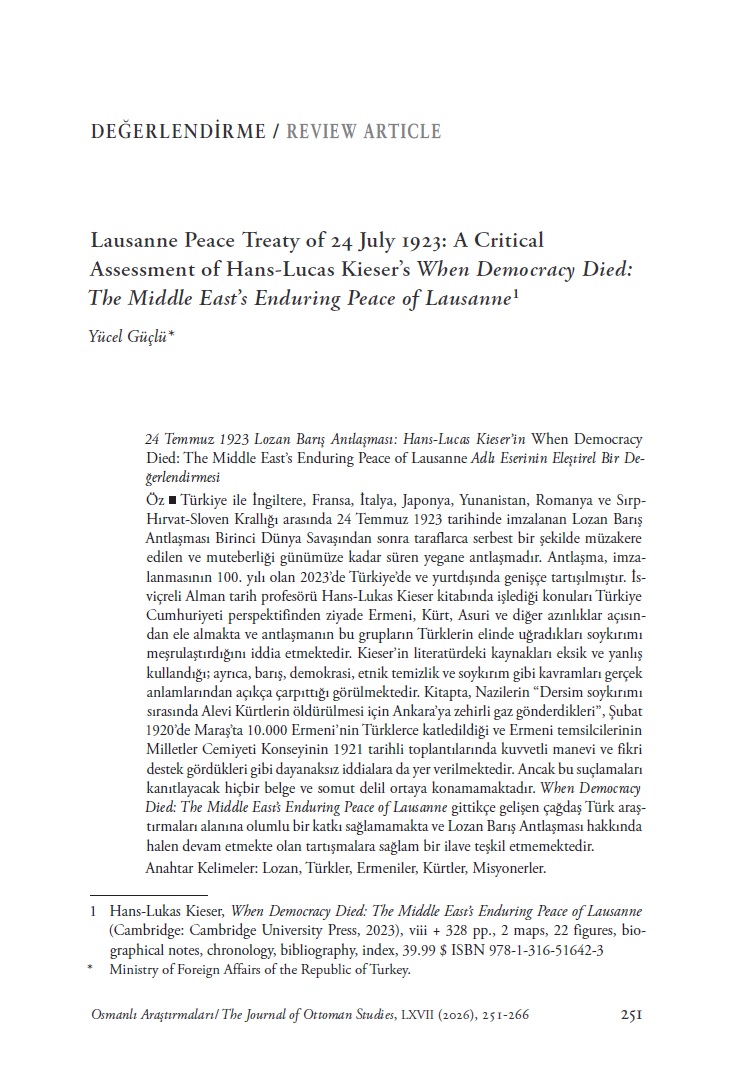
The Journal of Ottoman Studies (Osmanlı Araştırmaları Dergisi) recently published a detailed and substantive critique by Yücel Güçlü concerning Hans-Lukas Kieser’s book titled When Democracy Died: The Middle East's Enduring Peace of Lausanne (Cambridge University Press, 2023).[1] Kieser approaches the Lausanne Treaty primarily through the experiences of Armenians, Kurds, Assyrians, and other minorities, but with specific selectivity that leaves key sources and episodes out. Güçlü argues that the book suffers from many factual mistakes, methodological selectivity, and therefore concludes that Kieser’s book remains a politically motivated lobbying account that fails to contribute to the field of modern Turkish studies.
Güçlü notes that Kieser’s book is “not a model of clarity, in thinking and writing,” and that his definitions are unclear. Moreover, there is “a certain obscurity” when Kieser develops his arguments and the evidence Kieser uses does not obviously support his conclusions. In particular, Güçlü criticizes Kieser for not defining what the term “genocide” means. Kieser repeatedly applies the term to different historical experiences involving Armenians, Kurds, Greeks, Assyrians, Yezidis, and others. However, Güçlü notes, Kieser never establishes a sufficiently precise definition. Likewise, Güçlü notes that Kieser never defines what he means by “peace”. Is it the absence of war? Calm? Harmony? Autonomy for Kurds? Or recognition of the Armenian genocide claims?
Even though Güçlü does not state this explicitly, Kieser’s thesis inherently implies and accepts that any event at the expense of Turks is morally good, peaceful, and democratic. His unquestioning and effusive embrace of all minority nationalist aspirations as inherently democratic cannot be otherwise explained. The Dashnaks or Kurdish nationalists, whose nationalist and extreme aspirations Kieser considers as democratic self-determination, were entertaining disturbing notions of “racial purity” and fantasies of “Aryan brotherhood”. Kieser’s notion that any and all anti-Turkish movements were inherently just and democratic in part stems from not only from Kieser’s shallow consideration of these movements and their eventual goals but also his embrace of the same anti-Turkish worldview.
Güçlü takes Kieser to task for making very limited use of the proceedings of the Grand National Assembly of Türkiye during the 1922-23 period. Logically, parliamentary debates are indispensable for understanding Turkish political thinking during the Lausanne negotiations as they reveal how the government, politicians, and public representatives understood the issues being negotiated. Another omission concerns the archives of the American Board of Commissioners for Foreign Missions at Harvard. Likewise, Güçlü notes that Kieser relies on American diplomat Joseph Grew numerous times but gives very little attention to Mark Lambert Bristol. This lack of balance is significant since Bristol, who served as the American High Commissioner in Türkiye from 1919 to 1927, left a rich documentary record that would have enriched the perspective of any book covering this topic.
Güçlü also rejects Kieser’s charge that Turkish “Foreign Ministry documents are still hardly accessible” (p. 18). He notes that a major project to digitize the records were launched in 2019, with “around 65 million pages being processed and made available” via the State Archives.
Güçlü also disputes Kieser’s rather odd characterization of Franz Werfel’s Forty Days of Musa Dagh as a “documentary novel”. Güçlü rejects this treatment and demonstrates that Werfel was writing a work of fiction based substantially on existing propaganda materials and recollections rather than systematically reconstructing events from archival documents. This fact had been examined in detail by Kemal Çiçek in his study titled The Armenians of Musa Dagh, 1915-1939: A Story of Insurgency and Flight,[2] which Kieser simply ignores, a concrete illustration of Kieser’s selectivity and tendency to ignore elements that run counter to his thesis.
A substantial part of Güçlü’s review is devoted to the rebuttal of Kieser’s careless descriptions, reconstructions, or allegations untethered to facts. For example, Kieser alleges “about ten thousand” Armenians in Maraş were massacred in February 1920. Güçlü notes that this is undoubtedly an exaggeration, noting that Kieser “produces no detailed information on the subject, nor does he inform the sources from which he derived his information” and that none of the available figures provide “anything approaching a valid picture of the Armenian casualties in Maraş”. British Consul General in Beirut, Albert Charles Wratislaw himself reported to Foreign Secretary Lord Curzon “all estimates” “were conjectural.”
Similarly, Kieser makes a number of outrageous accusations that are simply advanced and floated without serious evidence. According Güçlü:
“The book mentions that Nazis “sent poison gas to Ankara that served to kill Alevi Kurds during the Dersim genocide” (p. 8). This is patently untrue. The facts are otherwise. The author gives no source or reference for his charge. He does not cite a single document, speech or comment that substantiates his allegation. No empirical evidence to document this claim has ever been uncovered in any archive. To the contrary, in Britain’s Foreign Office archival documents it is clearly indicated that the Turkish government was party to the Geneva Gas Protocol of 1925, whereby it accepted the prohibition of the use in war of asphyxiating, poisonous or of other gases. It is also referred that employment of poisonous gas in war demanded sophisticated training and in 1938 the Turkish army had no experts to conduct such operations. Kieser takes his conclusions ready-made from others, instead of forming them himself from the sources he uses.”
Another striking example concerns Kieser’s use of the alleged statement attributed to Adolf Hitler; “Who still speaks of the Armenians today?” Like many others who carefully examined this question, Güçlü concludes that the authenticity of this quotation is highly questionable. He notes that it was not accepted as established fact by the Nuremberg Tribunal and cites scholars and internal documents from the United States Holocaust Memorial Museum questioning its authenticity. This spurious quote ultimately rests on indirect testimony and notes whose provenance is extremely doubtful.
Reading Kieser’s book, a reader will encounter countless factual and spelling errors. Güçlü lists a limited number of these:
“Along with substantive shortcomings, factual errors abound, mostly in regard to names, dates and titles. For example, the first name of General İnönü is not İsmail but İsmet (p. 83, figure 6); Talaat Pasha’s code name in exile in Berlin was not Ali Said but Ali Saib (p. 111); the surname of the author of the book The Exchange of Minorities: Bulgaria, Greece andTurkey is not Lades but Ladas (p. 148, n. 74); Cevat Açıkalın’s initial first name is not Ahmed but Mehmet Muhittin (p. 158); Cevat Açıkalın was not a member of Rıza Nur’s team during the discussions in the Sub-Committee of Minorities held on 6 January 1923 it was Ahmed Cevad (Second Secretary at the Turkish Embassy in Vienna) (p. 158); Münir Ertegün was ambassador in Washington in 1934-1944 not only in 1930s (p. 249); Hasan Saka was the prime minister of Turkey in 1947-1949 not the president of the Republic (p. 291); the first name of the third president of the Turkish Republic is not Ce-mal but Celal (p. 289); Cevat Açıkalın was not Rıza Nur’s but Hasan Saka’s secre-tary in the Lausanne Conference (p. 292). Açıkalın was mostly occupied with the questions on the capitulations, the Ottoman public debt and the legal position of foreigners and their interests in Turkey. Şükrü Kaya did not only act as minister of foreign affairs and minister of the interior in 1924-1937 he also held the portfolio of minister of agriculture in 1924 (p. 295); İskenderun and Antakya were incorporated into Turkey in 1939, not 1938 (p. 307); Turkey [Türkiye] landed in Cyprus in 1974, not 1976 (p. 307).”
Güçlü concludes that the book is not a sound contribution of scholarship to the literature. He argues with justice that Kieser “subsumes scholarship to his own political agenda”, omits events and evidence that undercut his thesis, and is “motivated by highly charged, contending convictions about the relationship between the terms of the Treaty of Sèvres of 10 August 1920 and present-day Turkey”. Güçlü’s final conclusion and judgements on the book deserve to be presented in full since they go to the heart of the matter:
“No reader should turn to this book for information on the Lausanne Conference and the Treaty or on the issues in that field. They are more likely to be confused or misinformed than enlightened.”
Yücel Güçlü ends his review by expressing regret and concern that Cambridge University Press published “such shoddy and misconceived work”.
[1] Yücel Güçlü, “Lausanne Peace Treaty of 24 July 1923: A Critical Assessment of Hans-Lucas Kieser’s When Democracy Died: The Middle East’s Enduring Peace of Lausanne”, the Journal of Ottoman Studies/Osmanlı Araştırmaları Dergisi, No. 67 (2026): 251-266, https://osmanliarastirmalari.isam.org.tr/dergi/article/view/1225
[2] “The Book Titled “The Armenians Of Musa Dagh, 1915-1939: A Story Of Insurgency And Flight” Written By Kemal Çiçek Has Been Published”, Center for Eurasian Studies (AVİM), December 30, 2020, https://avim.org.tr/en/Duyuru/THE-BOOK-TITLED-THE-ARMENIANS-OF-MUSA-DAGH-1915-1939-A-STORY-OF-INSURGENCY-AND-FLIGHT-WRITTEN-BY-KEMAL-CICEK-HAS-BEEN-PUBLISHED
© 2009-2025 Center for Eurasian Studies (AVİM) All Rights Reserved
No comments yet.
-
 EU'S INCORRIGIBLE BIAS AND ANTAGONISM AGAINST TURKEY HAS BEEN REVEALED
AVİM 21.09.2020 -
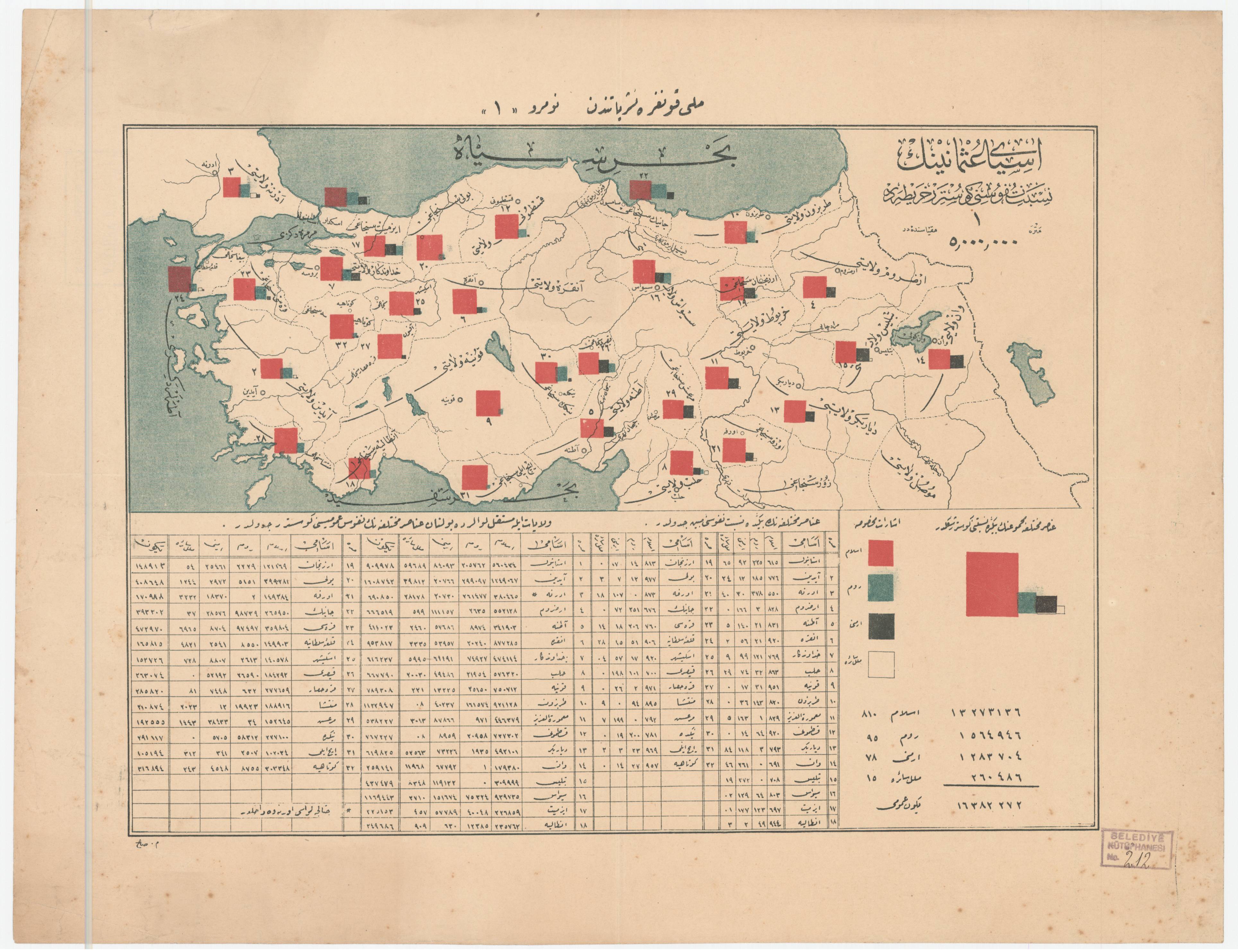 STATISTICAL INFORMATION REGARDING OTTOMAN ARMENIANS AND FOREIGN RESOURCES
AVİM 25.10.2021 -
 ARMENIAN JOURNEY FROM “OPERATION NEMESIS”, ASALA MURDERS AND KHOJALY MASSACRE TO PRESENT DAY “ARMENOPHOBIA” FABRICATION
AVİM 06.03.2019 -
 AN INTERESTING ARTICLE ON ARMENIAN REVOLUTIONARY GROUPS
AVİM 15.04.2026 -
 THE ROOTS OF “NEMESIS” AND THE BACKGROUND OF RADICAL ARMENIAN NATIONALIST TERRORISM
AVİM 11.05.2023
-
 CENTURY OLD “WHITE SUPREMACISM” AND THE FAR-RIGHT’S RISE IN SWEDEN: A CREDIBLE CHALLENGE TO PROGRESSIVE VALUES AND POLICIES?
Teoman Ertuğrul TULUN 25.01.2018 -
 THE NEVER-ENDING DECLARATIONS THAT EXCUSE TERRORIST SASSOUNIAN
Hazel ÇAĞAN ELBİR 05.04.2021 -
 FROM A MISNOMER TO MISDESIGN: POSSIBLE EU CUL-DE-SAC IN BALKANS
Teoman Ertuğrul TULUN 13.03.2018 -
 THE SASSOUNIAN QUESTION PRIOR TO 24 APRIL - THE US APPLIES DOUBLE STANDARDS
Hazel ÇAĞAN ELBİR 23.03.2021 -
 THE HARMFUL EFFECTS OF THE POLITICIZATION OF THE FENER GREEK PATRIARCHATE
Mehmet Oğuzhan TULUN 03.09.2025
-
25.01.2016
THE ARMENIAN QUESTION - BASIC KNOWLEDGE AND DOCUMENTATION -
12.06.2024
THE TRUTH WILL OUT -
27.03.2023
RADİKAL ERMENİ UNSURLARCA GERÇEKLEŞTİRİLEN MEZALİMLER VE VANDALİZM -
17.03.2023
PATRIOTISM PERVERTED -
23.02.2023
MEN ARE LIKE THAT -
03.02.2023
BAKÜ-TİFLİS-CEYHAN BORU HATTININ YAŞANAN TARİHİ -
16.12.2022
INTERNATIONAL SCHOLARS ON THE EVENTS OF 1915 -
07.12.2022
FAKE PHOTOS AND THE ARMENIAN PROPAGANDA -
07.12.2022
ERMENİ PROPAGANDASI VE SAHTE RESİMLER -
01.01.2022
A Letter From Japan - Strategically Mum: The Silence of the Armenians -
01.01.2022
Japonya'dan Bir Mektup - Stratejik Suskunluk: Ermenilerin Sessizliği -
03.06.2020
Anastas Mikoyan: Confessions of an Armenian Bolshevik -
08.04.2020
Sovyet Sonrası Ukrayna’da Devlet, Toplum ve Siyaset - Değişen Dinamikler, Dönüşen Kimlikler -
12.06.2018
Ermeni Sorunuyla İlgili İngiliz Belgeleri (1912-1923) - British Documents on Armenian Question (1912-1923) -
02.12.2016
Turkish-Russian Academics: A Historical Study on the Caucasus -
01.07.2016
Gürcistan'daki Müslüman Topluluklar: Azınlık Hakları, Kimlik, Siyaset -
10.03.2016
Armenian Diaspora: Diaspora, State and the Imagination of the Republic of Armenia -
24.01.2016
ERMENİ SORUNU - TEMEL BİLGİ VE BELGELER (2. BASKI)
-
AVİM Conference Hall 24.01.2023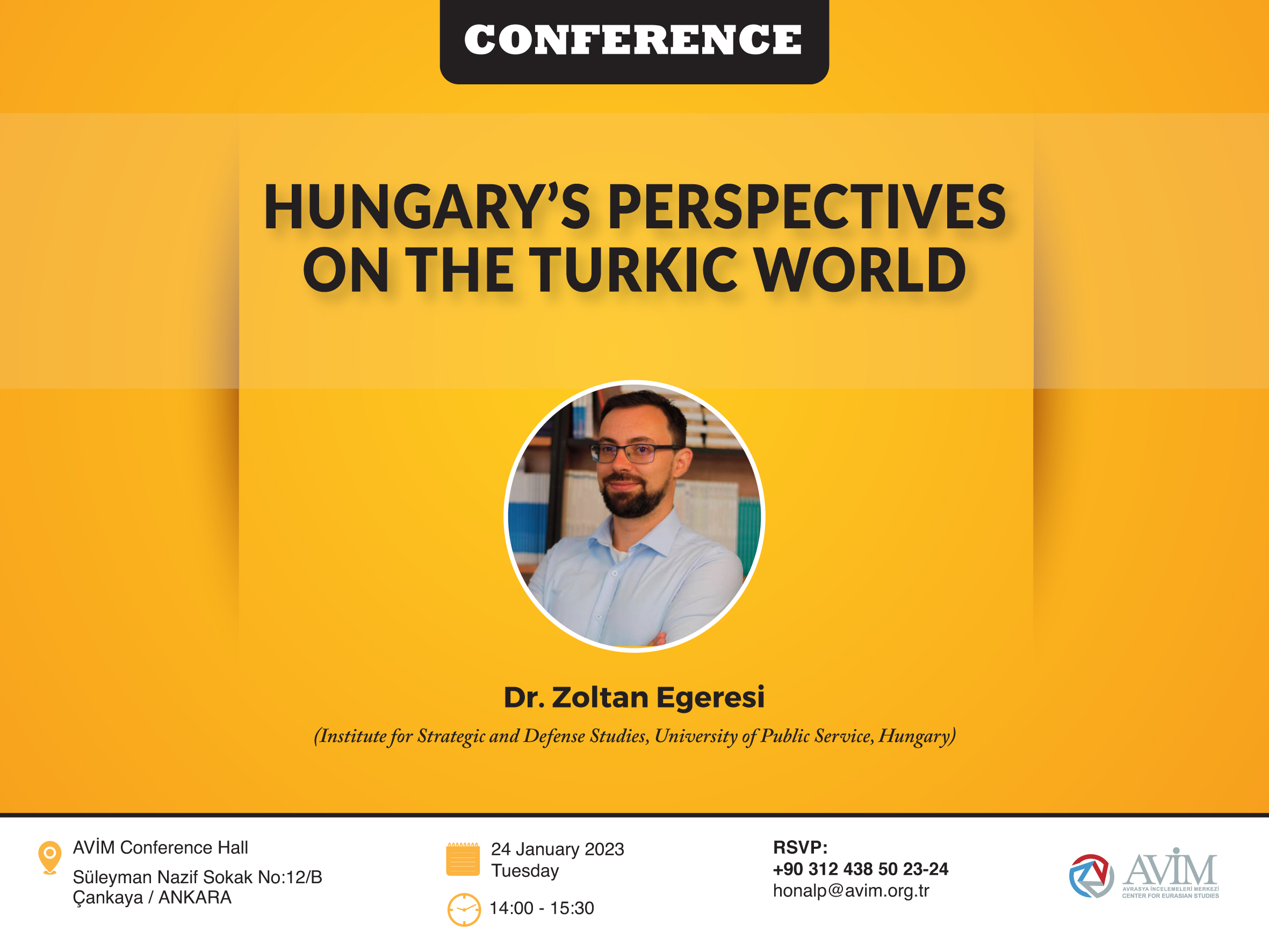
CONFERENCE TITLED “HUNGARY’S PERSPECTIVES ON THE TURKIC WORLD"