














This is the English translation of a Turkish language article that was originally published by AVİM on 4 March 2026.
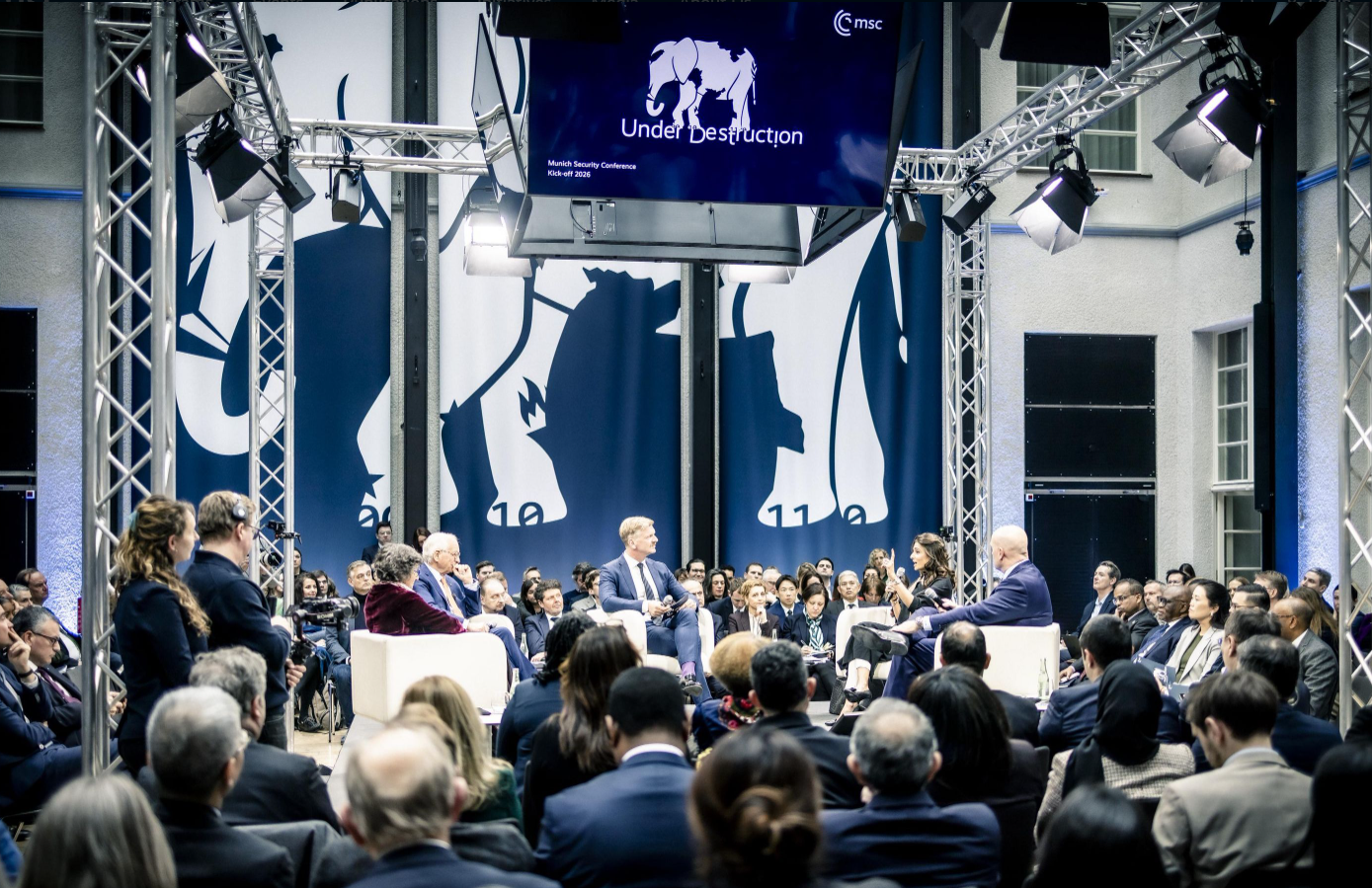
Held under the theme “Under Destruction,” the 2026 Munich Security Conference (MSC) summit revealed significant signs of change in Europe’s approach to security. Throughout the conference, topics such as Europe’s strategic autonomy, boosting defense industry capacity, strengthening NATO’s European flank, and reducing dependence on the U.S. came to the forefront.[1] In this context, the approach proposing that the European Union establish a more limited security coordination with specific partners such as the United Kingdom, Norway, and Canada is particularly noteworthy. However, the most notable aspect of this new security discourse is the insufficient consideration given to Türkiye, one of the significant actors of Euro-Atlantic security. While the European security architecture is being redesigned with a special emphasis on partners in the Indo-Pacific, the fact that Türkiye, a key country on NATO’s southern flank, is not included in these frameworks cannot be considered a coincidence. The emerging picture shows that Europe is increasingly restructuring its security architecture with a more selective and politically coordinated club mentality.
This approach highlighted at the Munich Security Conference is the result of Europe’s efforts to deepen security coordination with a narrower but more cohesive group of partners. The emphasis on the United Kingdom, Norway and Canada demonstrates that Europe’s security is increasingly being redefined along the axis of “like-minded partners.”[2] What is even more remarkable is the increased emphasis at the conference on Indo-Pacific actors such as Japan, South Korea, and Australia. This reveals that Europe’s security strategy has begun to be shaped more by normative proximity and economic priorities than by geographic realities. However, this new “club” mentality does not fully align with the hard geopolitical realities of European security. Security architectures are built not only on political alignment but also on concrete power elements such as geography, military capacity, and operational access. In this case, the insufficient consideration of Türkiye indicates a structural rupture in Europe’s security vision.
Türkiye is not a peripheral element of the Euro-Atlantic security architecture, but one of its central actors. Possessing one of NATO’s largest armies, Türkiye plays a critical role in the operational dimension of European security with its access to the Black Sea, geographic proximity to the Middle East and Eastern Mediterranean, its position on energy and transport corridors, and its developing defense industry capacity. Especially following the Russia-Ukraine war, the prominence of Black Sea security has further increased Türkiye’s geostrategic value. The implementation of the Montreux Convention, balance policies in the Black Sea, and advances in defense technologies—particularly unmanned aerial vehicles—have made Türkiye a hard-to-ignore actor in terms of European security.[3] Nevertheless, the insufficient consideration of Türkiye in security planning shows that Europe has still not fully established a balance between geographic necessities and political preferences.
Europe’s turn toward more cohesive security formats with specific partners may increase decision-making speed in the short term. However, this approach carries significant risks in the medium and long term. First, European security is shaped in a multilayered and multifaceted geography. Without operational access in regions such as Black Sea, Eastern Mediterranean, the Middle East and the Caucasus, it is difficult to sustain its security claims. Türkiye is located at the intersection of these regions. Second, Europe’s defense industry and military mobility still depend on NATO infrastructure and the geographic contributions of allies.[4] Türkiye’s logistics, bases and transit capabilities are critical to the practical functioning of the European security architecture. Third, in areas such as migration management, energy supply security, and counter-terrorism, Türkiye’s role is an inseparable part of Europe’s security agenda.[5] This reality demonstrates that the normative club approach does not always align with on-the-ground needs. The over-institutionalization of narrow-format collaborations carries the risk of creating gaps between power and cohesion in Europe’s security architecture.
The topics raised and discussions held at MSC highlight the question of how selective Europe can be in security cooperation. European capitals increasingly aim to establish deepened security cooperation with more cohesive and predictable partners. However, unlike economic cooperation, the security domain is one in which geography and military capabilities play a far more decisive role. Therefore, when Europe limits security cooperation to partners with closely aligned norms, there is a risk of misalignment between plans and the real conditions on the ground. The insufficient consideration of Türkiye in this approach should be read as a concrete indicator of the tension between Europe’s short-term political comfort and narrow-minded selectivity on the one hand, and long-term geopolitical necessities on the other.
The Munich Security Conference discussions reveal Europe’s push toward a more selective and comprehensive security approach. The limited consideration of Türkiye reflects the increasing strain between Europe’s preferred norms and the hard geopolitical realities it faces. A lasting and effective European security order depends not only on the deepening of narrow formats with high political cohesion but also on maintaining an inclusive strategic mindset required by the distribution of power on the ground. Pushing a geopolitically central ally like Türkiye into a secondary position in security matters carries the potential to conflict with Europe’s long-term security objectives. In the coming period, the success of the European security architecture will be determined by the balance established between selective cooperation efforts and geopolitical necessities. The current trajectory, however, shows that this balance has not yet been fully achieved.
*Picture: EUobserver
[1] “Munich Security Report 2026 Executive Summary”, MSC, February 2026 https://securityconference.org/en/publications/munich-security-report/2026/executive-summary/
[2] “Security and defence partnership,”Council of European Union, January 28, 2026, https://www.consilium.europa.eu/en/policies/security-defence-partnerships/
[3] “GUARDIANSHIP UNDER PRESSURE: DRONE ESCALATION, RUSSIAN MILITARIZATION, AND TÜRKIYE’S LEGAL ORDER IN THE BLACK SEA,” AVİM, January 9, 2026, https://www.avim.org.tr/public/index.php/en/Yorum/GUARDIANSHIP-UNDER-PRESSURE-DRONE-ESCALATION-RUSSIAN-MILITARIZATION-AND-TURKIYE-S-LEGAL-ORDER-IN-THE-BLACK-SEA
[4] “Europe remains ‘highly vulnerable’ and dependent on US defence production – report,” Euronews, June 20, 2025, https://www.euronews.com/my-europe/2025/06/20/europe-remains-highly-vulnerable-and-dependent-on-us-defence-production-report
[5] “Transatlantik ittifakın sarsıntıları ve Avrupa güvenlik mimarisi: Türkiye'nin stratejik rolü,” Independent Türkçe, August 11, 2025, https://www.indyturk.com/node/763150/t%C3%BCrki%CC%87yeden-sesler/transatlantik-ittifak%C4%B1n-sars%C4%B1nt%C4%B1lar%C4%B1-ve-avrupa-g%C3%BCvenlik-mimarisi
© 2009-2025 Center for Eurasian Studies (AVİM) All Rights Reserved
No comments yet.
-
 INDIA’S STRATEGIC BALANCING CHALLENGES THE QUAD
Özge Emine ÖZÇELİK 21.01.2026 -
 SHANGHAI COOPERATION ORGANIZATION (SCO) BISHKEK SUMMIT
Özge Emine ÖZÇELİK 15.09.2026 -
TÜRKİYE’S ROLE IN EUROPE’S CHANGING SECURITY STRATEGY
Özge Emine ÖZÇELİK 16.03.2026 -
 TÜRKİYE-TRNC STRATEGIC COOPERATION
Özge Emine ÖZÇELİK 27.07.2026 -
 TÜRKİYE-EU TRADE RELATIONS: OPPORTUNITIES AND CHALLENGES
Özge Emine ÖZÇELİK 01.04.2026
-
 THE 2019 ARMENIAN PATRIARCH OF ISTANBUL ELECTION GUIDELINE AND RELATED DISPUTES
Mehmet Oğuzhan TULUN 21.11.2019 -
 GERMANY OVER RECOGNITION OF THE 1915 EVENTS AS GENOCIDE
Cemre Dilay BOZTEPE 12.05.2015 -
 THE JUDGEMENT OF THE EUROPEAN COURT OF HUMAN RIGHTS GRAND CHAMBER ON PERİNÇEK v. SWITZERLAND CASE in PERSPECTIVE - 2: THREE DISQUALIFIED ARGUMENTS AND “THE PREVENTION OF DISORDER”
Turgut Kerem TUNCEL 23.10.2015 -
 IS ECUMENISM BEING DISRUPTED IN THE CHRISTIAN WORLD?
Mehmet Oğuzhan TULUN 24.09.2018 -
 INTERNATIONAL COOPERATION IN THE RELATIONS BETWEEN TURKEY AND CENTRAL ASIA
Tutku DİLAVER 17.02.2020
-
25.01.2016
THE ARMENIAN QUESTION - BASIC KNOWLEDGE AND DOCUMENTATION -
12.06.2024
THE TRUTH WILL OUT -
27.03.2023
RADİKAL ERMENİ UNSURLARCA GERÇEKLEŞTİRİLEN MEZALİMLER VE VANDALİZM -
17.03.2023
PATRIOTISM PERVERTED -
23.02.2023
MEN ARE LIKE THAT -
03.02.2023
BAKÜ-TİFLİS-CEYHAN BORU HATTININ YAŞANAN TARİHİ -
16.12.2022
INTERNATIONAL SCHOLARS ON THE EVENTS OF 1915 -
07.12.2022
FAKE PHOTOS AND THE ARMENIAN PROPAGANDA -
07.12.2022
ERMENİ PROPAGANDASI VE SAHTE RESİMLER -
01.01.2022
A Letter From Japan - Strategically Mum: The Silence of the Armenians -
01.01.2022
Japonya'dan Bir Mektup - Stratejik Suskunluk: Ermenilerin Sessizliği -
03.06.2020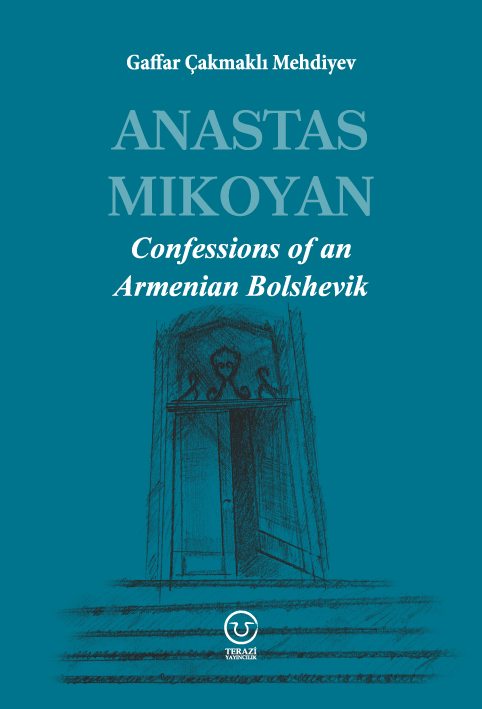
Anastas Mikoyan: Confessions of an Armenian Bolshevik -
08.04.2020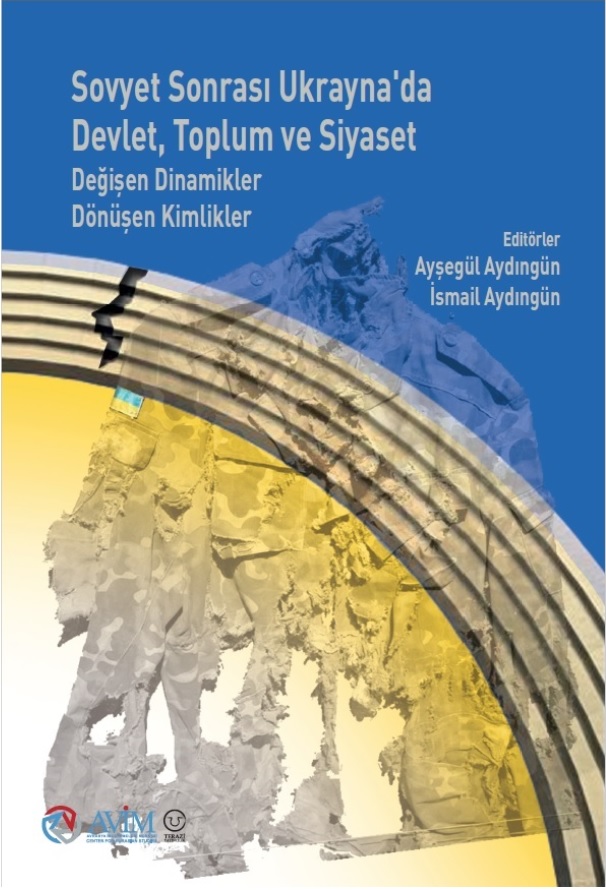
Sovyet Sonrası Ukrayna’da Devlet, Toplum ve Siyaset - Değişen Dinamikler, Dönüşen Kimlikler -
12.06.2018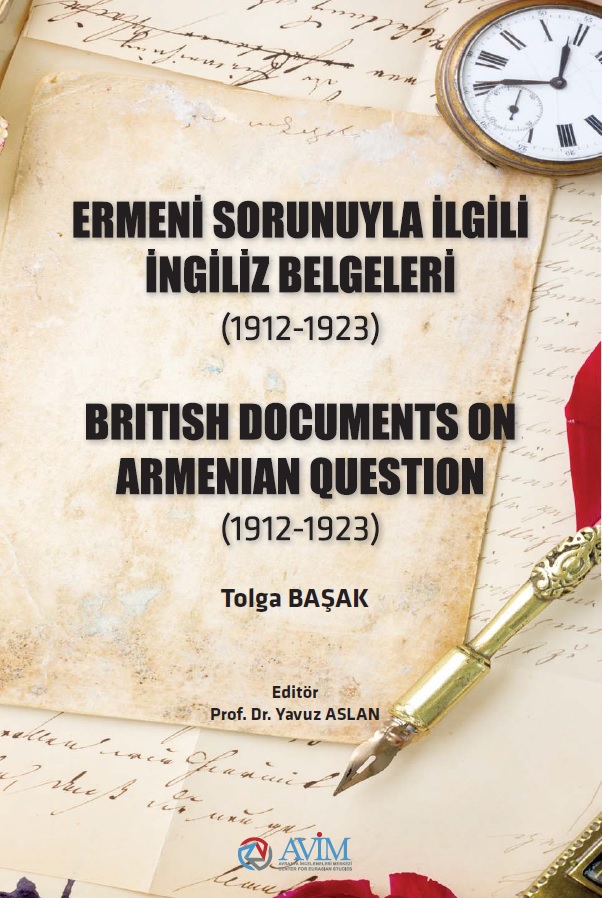
Ermeni Sorunuyla İlgili İngiliz Belgeleri (1912-1923) - British Documents on Armenian Question (1912-1923) -
02.12.2016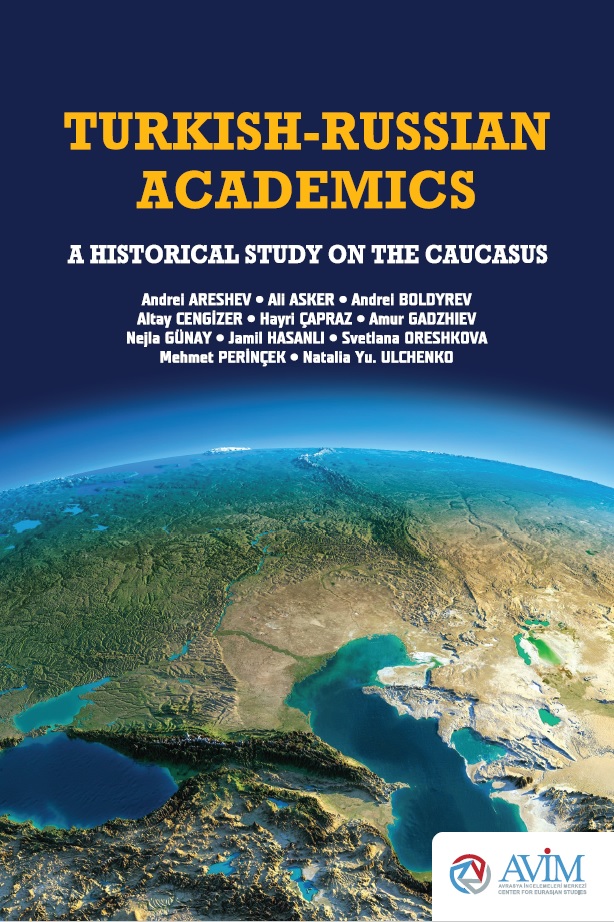
Turkish-Russian Academics: A Historical Study on the Caucasus -
01.07.2016
Gürcistan'daki Müslüman Topluluklar: Azınlık Hakları, Kimlik, Siyaset -
10.03.2016
Armenian Diaspora: Diaspora, State and the Imagination of the Republic of Armenia -
24.01.2016
ERMENİ SORUNU - TEMEL BİLGİ VE BELGELER (2. BASKI)
-
AVİM Conference Hall 24.01.2023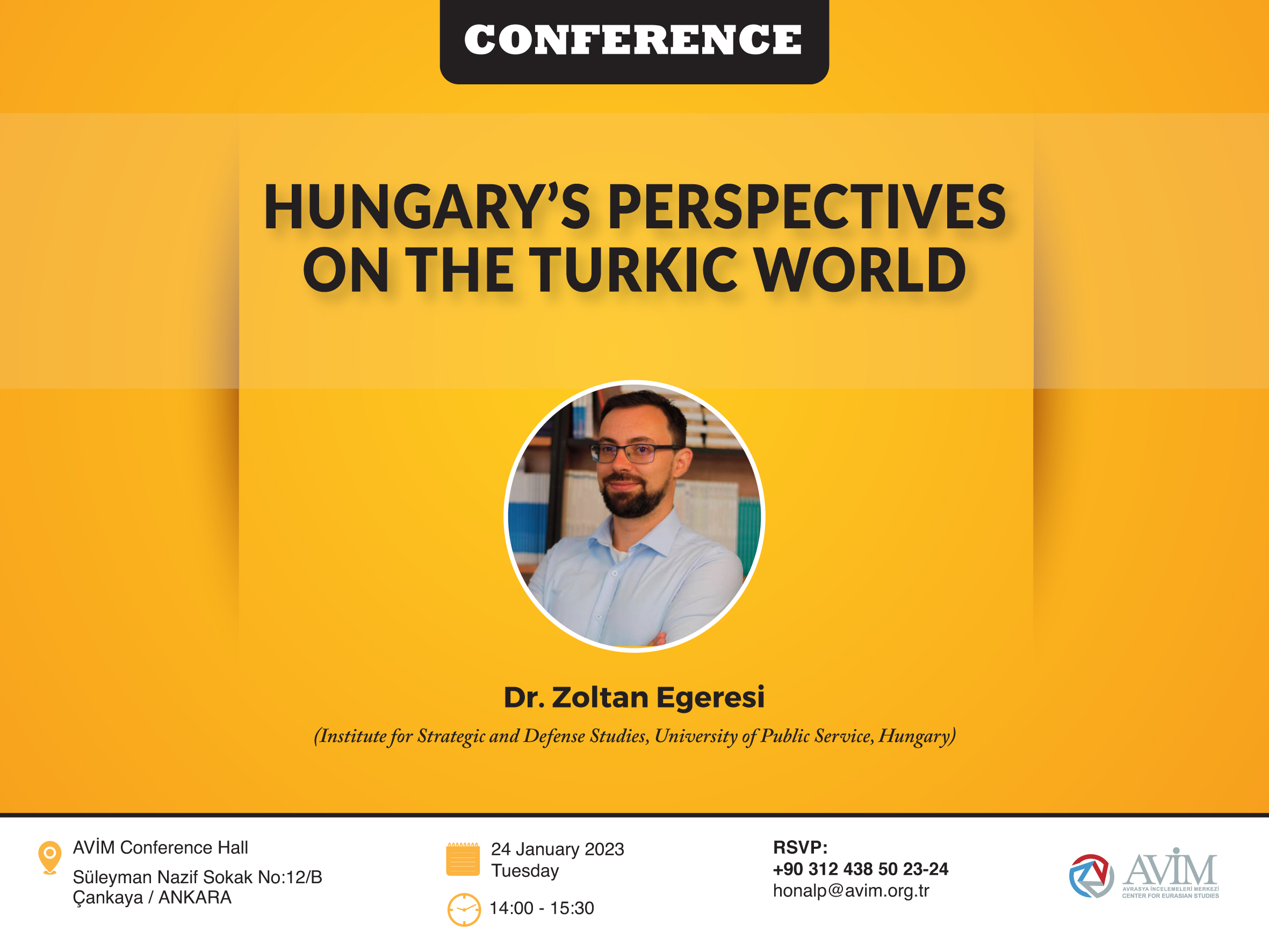
CONFERENCE TITLED “HUNGARY’S PERSPECTIVES ON THE TURKIC WORLD"