

















EuroNews (18 January 2018)
Human Rights Watch praises France under Macron for tackling xenophobia, but blasts Austria and the Netherlands for pandering to populists.
Leaders can succeed if they “push back strongly against politicians who demonize minorities, attack human rights, and undermine democratic institutions”, according to Human Rights Watch (HRW) in a new report on fighting populism.
The global campaign group argues that the events of 2017 showed that politicians who took a principled stand over human rights were able to limit authoritarian populist agendas – but where they gave in, it allowed such programmes to flourish.
Human Rights Watch singles out the electoral defeat of the National Front in France, and EU challenges to government plans in Hungary and Poland, as examples of successful or encouraging resistance in Europe.
The report also says that President Donald Trump’s election in the United States saw a wide range of organisations and individuals rise up against the new leader’s “anti-immigrant, racially divisive, and pro-drug war policies”.
“The past year showed the importance of pushing back against the threat posed by demagogues and their abusive policies,” says HRW’s Executive Director Kenneth Roth.
Europe — a mixed picture
France is praised as “the most prominent example of successful resistance to xenophobic populism”, with President Emmanuel Macron “firmly opposing the National Front’s campaign of hatred against Muslims and immigrants” and becoming elected as president. But the report says his record in government has been mixed at home and abroad.
Poland’s “attempts to undermine the rule of law and judicial independence” brought public protests and strong criticism from European institutions, HRW says. In Hungary, government plans to close a university that opposed Viktor Orban’s “illiberal democracy” ran into trouble due to resistance.
In contrast, centre-right party leaders in Austria and the Netherlands are accused of pandering to populism by bringing “xenophobic, anti-immigrant, and anti-Muslim positions” into the mainstream.
Anti-rights forces were also allowed to prosper when President Recep Tayyip Erdogan “decimated Turkey’s democratic system”, international concern flagging as the EU focused instead on enlisting the president’s help to stem the flight of refugees to Europe.
Fighting Trump — and global abuses
The HRW report highlights widespread opposition to the US president during his first year in office. There was “a broad reaffirmation of human rights” as “popular organisations, civic groups, journalists, lawyers, judges, and even elected members of Trump’s own party” resisted his policies, it says.
Challenging Trump abroad, governments in the Netherlands, Belgium and Scandinavia “led efforts” to establish an international fund to replace anticipated US funding cuts to reproductive health programmes.
Numerous advances in women’s rights are listed, with France and Sweden praised for their policies – as are Tunisia, Jordan and Lebanon in the Arab world. “The Women’s March in the US morphed into a global phenomenon,” HRW says.
However, the report says Egypt, China and Russia were able to crush public dissent, with other countries and international bodies unwilling or afraid to speak out.
Europe on the world stage: ‘could do better’
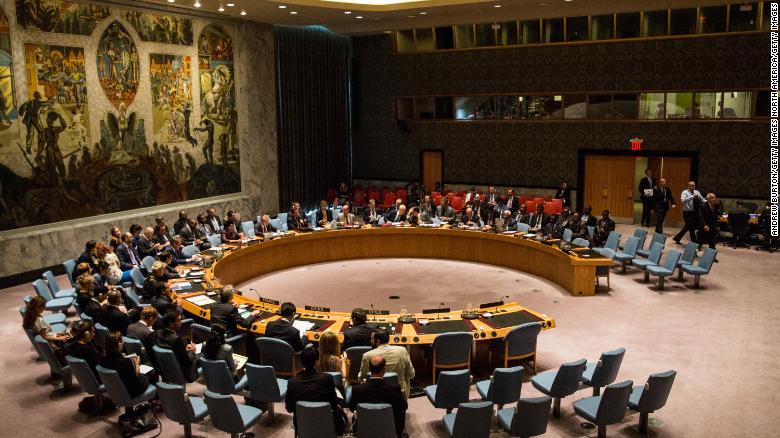
Human Rights Watch paints something of a David v Goliath situation in praising Liechtenstein over Syria. Faced with an intransigent Russia at the UN Security Council, the small European nation built a broad coalition to seek a resolution at the General Assembly.
However, the hesitancy of European countries among others have left a vacuum and allowed mass atrocities to happen in places such as Yemen, Syria, Myanmar and South Sudan.
Kenneth Roth warns of the dangers of failing to champion human rights, describing “a UK preoccupied with Brexit, and European countries grappling with the influence of xenophobic populists”.
“The central lesson of the past year is that human rights can be protected from populist challenge,” HRW’s executive director says. “What’s needed is a principled defence rather than surrender, a call to action rather than a cry of despair.”
No comments yet.
-
 RUSSIA, US SPAR ON IRAN, NORTH KOREA, SYRIA
Asia - Pacific
19.01.2018
RUSSIA, US SPAR ON IRAN, NORTH KOREA, SYRIA
Asia - Pacific
19.01.2018
- BULGARIA’S BORISSOV WARNS OF INSTABILITY RISK IN BALKANS WITHOUT EU SUPPORT The Balkans 19.01.2018
- ‘STANDING UP TO HATE-INCITING POPULISTS DOES WORK’: HUMAN RIGHTS WATCH REPORT Europe - EU 19.01.2018
- ARMENIA ENERGY MINISTER RESIGNS The Caucasus and Turkish-Armenian Relations 19.01.2018
- US REJECTS ACCUSATIONS IT GAVE RISE TO IS IN AFGHANISTAN Asia - Pacific 19.01.2018
-
25.01.2016
THE ARMENIAN QUESTION - BASIC KNOWLEDGE AND DOCUMENTATION -
12.06.2024
THE TRUTH WILL OUT -
27.03.2023
RADİKAL ERMENİ UNSURLARCA GERÇEKLEŞTİRİLEN MEZALİMLER VE VANDALİZM -
17.03.2023
PATRIOTISM PERVERTED -
23.02.2023
MEN ARE LIKE THAT -
03.02.2023
BAKÜ-TİFLİS-CEYHAN BORU HATTININ YAŞANAN TARİHİ -
16.12.2022
INTERNATIONAL SCHOLARS ON THE EVENTS OF 1915 -
07.12.2022
FAKE PHOTOS AND THE ARMENIAN PROPAGANDA -
07.12.2022
ERMENİ PROPAGANDASI VE SAHTE RESİMLER -
01.01.2022
A Letter From Japan - Strategically Mum: The Silence of the Armenians -
01.01.2022
Japonya'dan Bir Mektup - Stratejik Suskunluk: Ermenilerin Sessizliği -
03.06.2020
Anastas Mikoyan: Confessions of an Armenian Bolshevik -
08.04.2020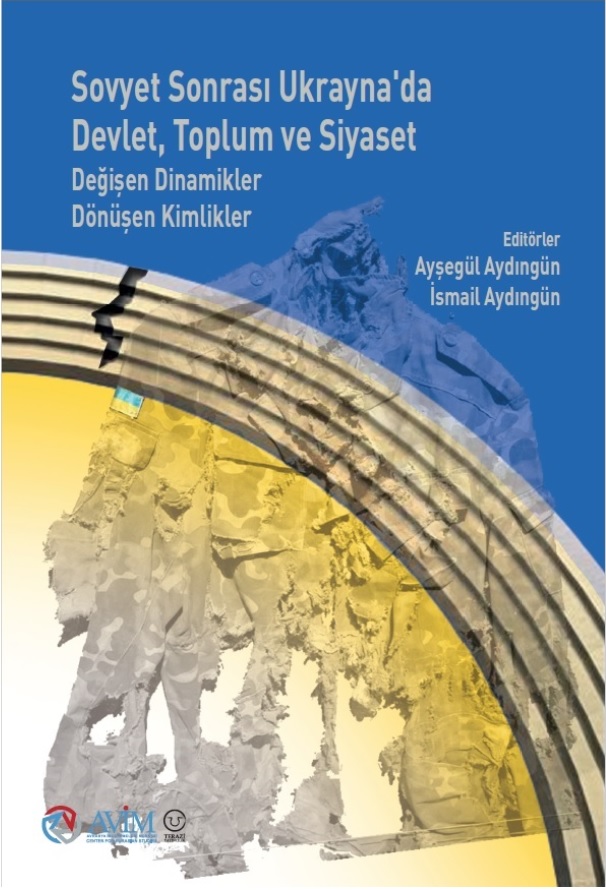
Sovyet Sonrası Ukrayna’da Devlet, Toplum ve Siyaset - Değişen Dinamikler, Dönüşen Kimlikler -
12.06.2018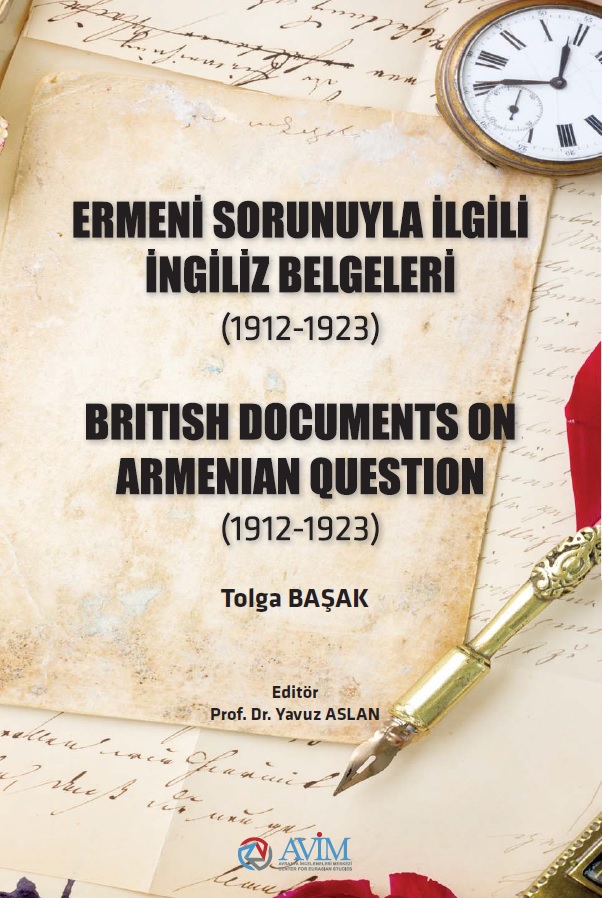
Ermeni Sorunuyla İlgili İngiliz Belgeleri (1912-1923) - British Documents on Armenian Question (1912-1923) -
02.12.2016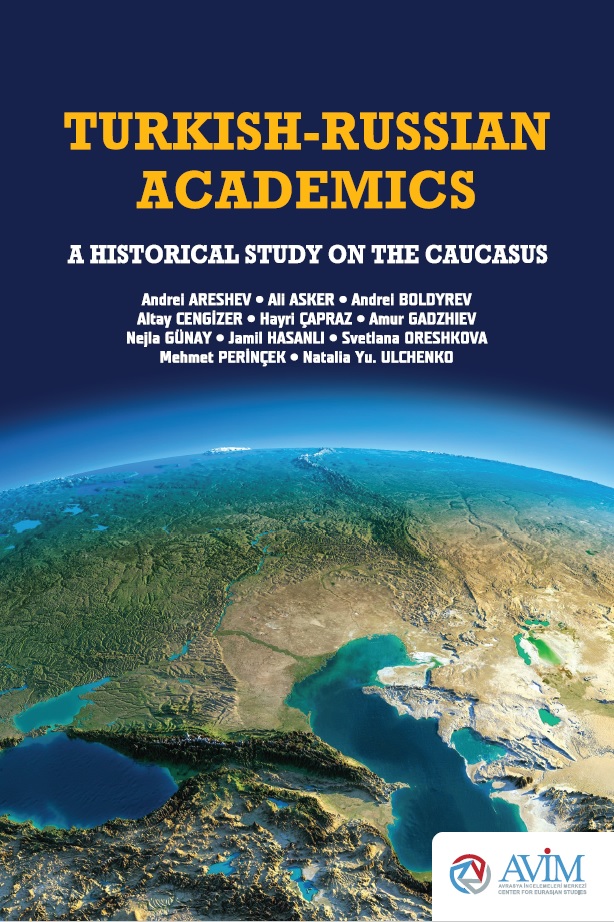
Turkish-Russian Academics: A Historical Study on the Caucasus -
01.07.2016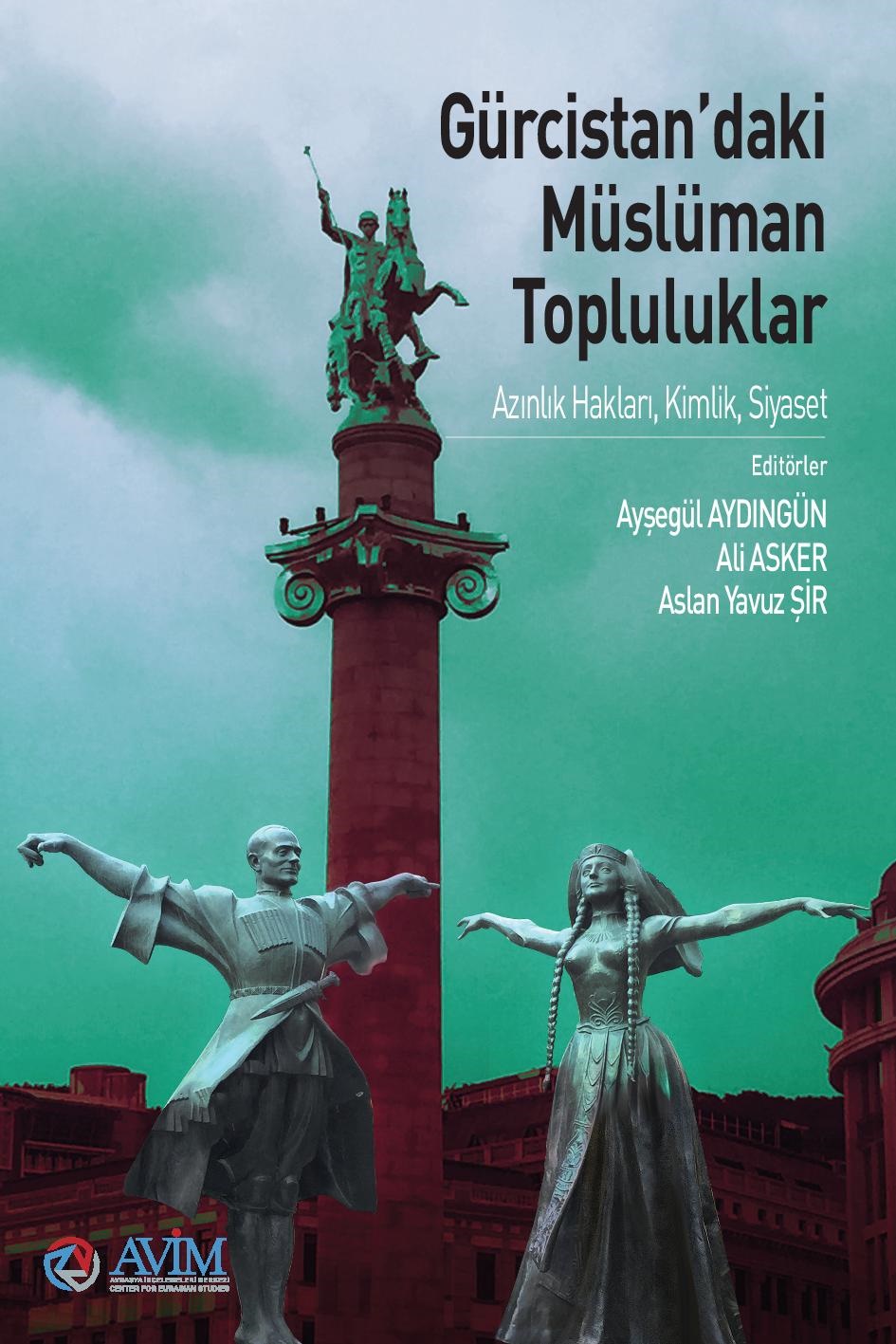
Gürcistan'daki Müslüman Topluluklar: Azınlık Hakları, Kimlik, Siyaset -
10.03.2016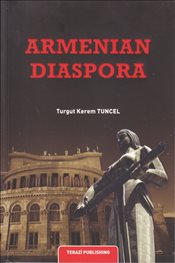
Armenian Diaspora: Diaspora, State and the Imagination of the Republic of Armenia -
24.01.2016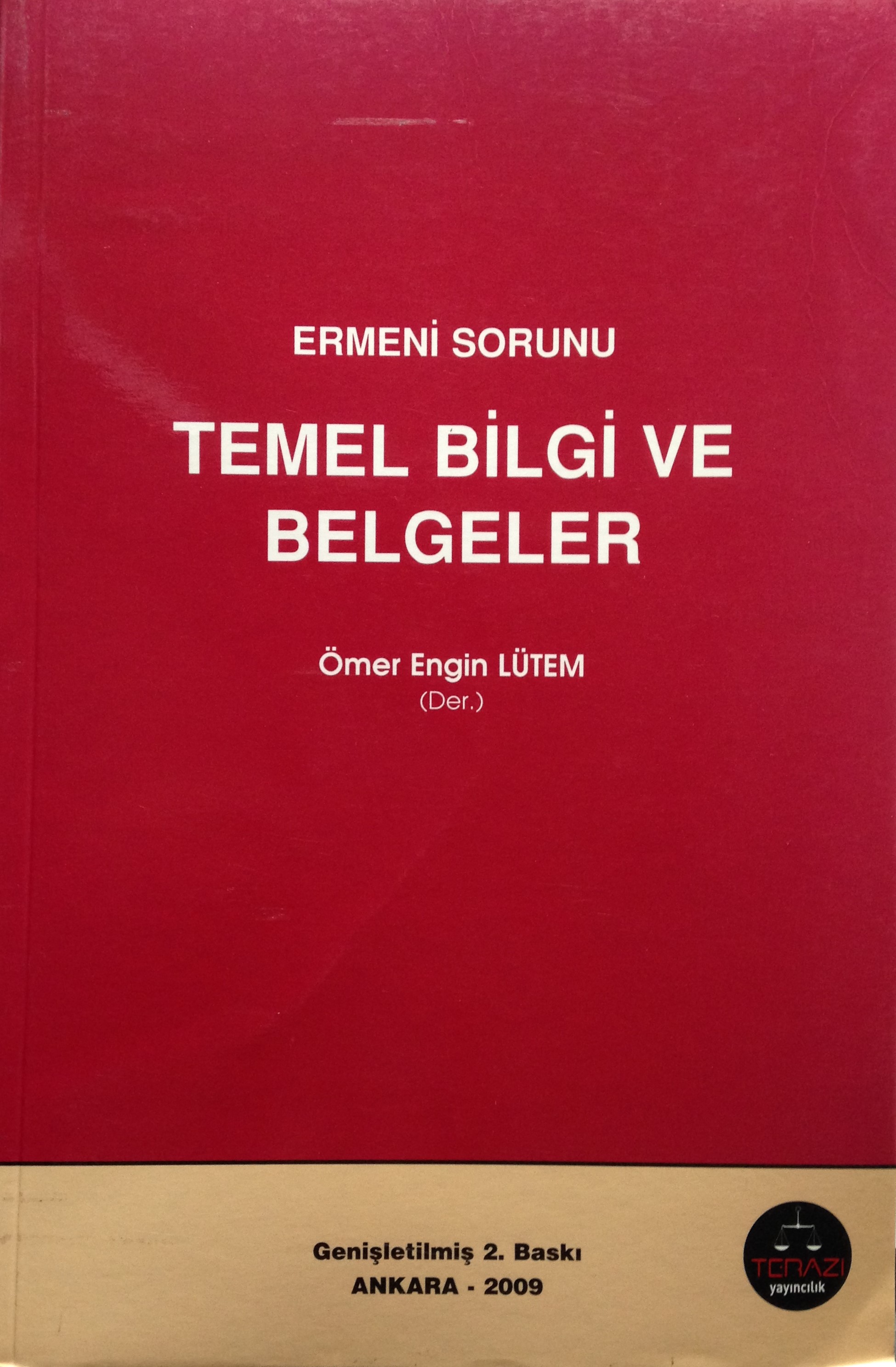
ERMENİ SORUNU - TEMEL BİLGİ VE BELGELER (2. BASKI)
-
AVİM Conference Hall 24.01.2023
CONFERENCE TITLED “HUNGARY’S PERSPECTIVES ON THE TURKIC WORLD"